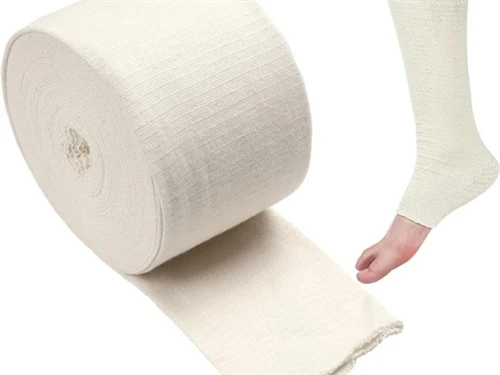
A tubular bandage is a stretchable, tube-shaped medical textile designed to provide light support, protection, compression, or a comfortable layer over dressings and other medical applications. Unlike traditional flat bandages, a tubular bandage is manufactured in a continuous cylindrical shape, allowing it to slide easily over a finger, hand, arm, leg, or other body area without requiring complicated wrapping techniques.
Also known as stockinette in some medical settings, tubular bandages are widely used in sports medicine, wound care, rehabilitation, orthopedics, and everyday first-aid applications. Their simple design makes them particularly convenient for healthcare professionals and users who need a secure covering that can adapt to body contours.
Depending on the intended application, tubular bandages can be produced from different materials, including cotton-polyester blends and rubber-based elastic materials. They are also available in different yarn specifications to provide different levels of softness, stretch, and structural performance.
How Does a Tubular Bandage Work?
The basic structure of a tubular bandage is relatively simple: instead of being a flat piece of fabric, it is knitted or woven into a continuous tube. The elasticity of the material allows the bandage to expand when placed over a body part and then gently conform to its shape.
This tubular construction offers several practical advantages. First, it makes application faster because the user does not need to repeatedly wrap and secure the bandage. Second, the fabric can maintain relatively consistent contact with the skin. Third, the tube can accommodate movement and changes in body shape, which is especially useful in sports and rehabilitation environments.
A tubular bandage can be cut to the required length, making a tubular bandage roll a practical option for medical facilities, clinics, sports teams, and professional distributors. The continuous format allows users to select the amount needed for a particular application while reducing unnecessary material waste.

What Materials Are Used in Tubular Bandages?
Material selection plays an important role in determining the feel, elasticity, durability, and intended use of a tubular bandage.
Cotton-Polyester Tubular Bandage
Cotton-polyester is a commonly selected material combination because it balances comfort and durability. Cotton contributes a soft, skin-friendly feel, while polyester helps improve the fabric's strength and resistance to repeated use.
This combination can be particularly useful when a tubular bandage needs to remain comfortable during extended wear. The knitted construction also allows the material to conform to the body without feeling excessively restrictive.
For applications where skin comfort is a priority, cotton-polyester stockinette can be used as a protective layer underneath other medical or orthopedic materials.
Rubber Tubular Bandage
Rubber material provides a higher degree of elasticity and recovery. This makes rubber tubular bandages suitable for applications where stretch and close conformity to the body are important.
The elastic structure allows the bandage to expand during application and return toward its original dimensions after placement. This can help the material stay in position while accommodating normal body movement.
Material selection should always be based on the specific application, desired elasticity, skin-contact requirements, and professional recommendations.
Different Yarn Counts for Different Applications
Tubular bandages can also be manufactured using different cotton yarn counts, including 32s, 26s, and 21s.
Yarn count is an important specification because it can influence the texture, thickness, density, and overall hand feel of the finished fabric. In general, finer yarn can contribute to a lighter and smoother textile structure, while coarser yarn can provide a more substantial fabric feel.
The availability of 32s, 26s, and 21s yarn options gives manufacturers and distributors greater flexibility when developing tubular bandages for different markets and applications.
When selecting a product, it is important to consider the complete construction rather than focusing on yarn count alone. Knitting structure, material composition, elasticity, dimensions, and finishing processes can all influence the final performance of the bandage.
What Are Tubular Bandages Used For?
One of the key benefits of tubular bandages is their versatility. They can be used in a variety of healthcare, sports, and rehabilitation situations.
1. Supporting Dressings
A tubular bandage can be used to hold a dressing securely against the skin without relying solely on adhesive tape. Its elasticity allows it to gently conform to the body while helping keep the underlying dressing in place.
This can be useful for areas where traditional adhesive products may be inconvenient, particularly when the dressing needs to be changed regularly.
2. Sports and Rehabilitation
Athletes and active individuals may use tubular bandages as part of sports injury management and rehabilitation. Depending on the product design, they can provide light support and help maintain dressings or protective materials in position.
For example, tubular bandages for legs can be used as a convenient covering for the lower leg or other areas requiring a tubular form. Their stretchable construction allows the fabric to accommodate movement during walking, training, and rehabilitation exercises.
However, tubular bandages should not automatically be considered equivalent to medically prescribed compression garments. The appropriate level of compression depends on the specific product and intended medical application.
3. Orthopedic Applications
Stockinette is commonly associated with orthopedic applications because it can be placed underneath casts, splints, or other orthopedic materials as a protective interface.
Its soft textile structure can help create a comfortable layer between the skin and external orthopedic materials. The tubular shape also makes it easier to cover a limb evenly compared with cutting and wrapping a flat fabric.
4. General Skin Protection
A tubular bandage can also act as a protective textile layer in situations where a body area needs additional coverage. Its flexible construction allows it to move with the body rather than becoming rigid during normal activity.
For professional healthcare providers, having different sizes and materials available can make it easier to select an appropriate option for different body areas and applications.
Why Choose a Tubular Bandage Roll?
For professional users and distributors, a tubular bandage roll provides flexibility that pre-cut products may not offer.
Instead of purchasing individual pieces with fixed lengths, a roll can be cut according to the requirements of each application. This is particularly useful in hospitals, clinics, rehabilitation centers, sports medicine facilities, and first-aid supply businesses.
A tubular bandage roll can also simplify inventory management. One continuous roll can serve multiple applications, provided the width, material, and elasticity are appropriate for the intended use.
When purchasing tubular bandages in bulk, buyers should consider not only the roll length but also the fabric composition, tube width, stretch characteristics, yarn count, packaging, and available customization options.

How to Choose the Right Tubular Bandage
The right tubular bandage depends on the application and the body area where it will be used. Several factors should be considered.
Material: Choose cotton-polyester when softness, comfort, and balanced durability are important. Rubber-based materials may be considered when greater elasticity is required.
Size: The tubular diameter should be appropriate for the intended body part. A suitable size helps the bandage fit comfortably without unnecessary bunching or excessive tension.
Elasticity: Consider how much stretch and recovery are needed. Different applications may require different elastic characteristics.
Yarn specification: Options such as 32s, 26s, and 21s provide flexibility in fabric construction and product development.
Intended use: A product designed for dressing retention may have different requirements from one intended for orthopedic or sports applications.
Tubular Bandage vs. Traditional Flat Bandage
The main difference between a tubular bandage and a traditional flat bandage is the way each product is constructed and applied.
A flat bandage generally needs to be wrapped around the body and secured. A tubular bandage, on the other hand, can simply be pulled over the target area. This makes application faster and can provide a more uniform covering.
The tubular format is particularly convenient for cylindrical body areas such as arms and legs. It can also reduce the need for clips, adhesive tape, or other fastening methods, depending on the application.
For busy clinical environments, this simple application process can improve convenience and efficiency.
Conclusion
A tubular bandage is a practical and versatile medical textile that combines a tube-shaped construction with stretch and adaptability. Also known as stockinette, it can be used for dressing retention, skin protection, sports and rehabilitation applications, and orthopedic purposes.
With cotton-polyester and rubber material options, as well as cotton yarn specifications including 32s, 26s, and 21s, tubular bandages can be developed to meet different performance and application requirements.
Whether you need tubular bandages for legs, a tubular bandage roll for professional use, or a customized stockinette solution for medical distribution, understanding the material, size, elasticity, and construction is essential for selecting the appropriate product.
For manufacturers, wholesalers, and medical supply distributors, offering multiple material and specification options can also help meet the diverse requirements of healthcare professionals and end users.